Search This Blog

Showing posts with label Tesla. Show all posts

Saturday, July 22, 2023

BYD's Shocking Surge: Electric Revolt Threatens Tesla's Throne!

BYD

In recent years, the electric vehicle (EV) industry has witnessed exponential growth, with several prominent players vying for dominance. Among these, Tesla has long been considered the undisputed leader, but an up-and-coming challenger is making significant strides: BYD. With record-breaking EV sales and impressive profits, BYD is closing in on Tesla's market position. This article delves into the recent financial performance of both companies, their strategies, and the potential implications for the EV market.

BYD's Remarkable Financial Performance

During the past quarter, BYD announced a staggering US$1.6 billion profit, demonstrating an astounding 200% increase year-on-year. While this may trail Tesla's profits by a third, it is a remarkable feat given the relatively short period since BYD entered the EV market. The primary driving force behind BYD's success lies in its record-breaking sales of electric vehicles. Should this trend continue, BYD has the potential to catch up to Tesla in terms of production capacity and profitability.

Tesla's Dominance and Recent Challenges

Tesla, being the frontrunner in the EV market, enjoyed impressive success during the same quarter. The company reported record EV sales, reaching nearly 480,000 vehicles, a production volume that exceeded previous expectations. CEO Elon Musk's ambitious goal of achieving 1.8 to 2 million units for the year seemed within reach. Tesla also posted a substantial revenue of approximately US$25 billion, surpassing analysts' profit per share estimates.

Despite Tesla's impressive results, its operating profit of US$2.4 billion dipped slightly year-on-year, which elicited concerns from Wall Street. Elon Musk attributed this dip to temporary fluctuations in margins and emphasized the potential for recovery. Nevertheless, this announcement led to a stock market downturn as investors initiated profit-taking, causing the share price to drop after a period of significant growth.

BYD's Strong Position and Direct Competition with Tesla

BYD's financial outlook remains highly optimistic, with the company projecting a record profit of US$1.64 billion for the quarter, matching Tesla's impressive 18% gross margin. Notably, BYD's operating profit is set to increase by an astonishing 192% to 225% year-on-year, a feat unmatched by Tesla. This exceptional performance can be attributed to the surging sales of "new energy vehicles," primarily battery-powered cars and hybrids.

BYD's Vertical Integration Advantage

One of BYD's key advantages over Tesla lies in its vertical integration. As the world's second-largest EV manufacturer and a significant battery supplier (second only to CATL), BYD enjoys unparalleled synergies in producing both vehicles and batteries. This vertical integration enables the company to capitalize on the drop in lithium prices, providing an edge over Tesla in cost savings.

Tesla, too, is expected to benefit significantly from the decline in lithium prices, with projected savings nearing $1 billion this year. However, BYD's integration allows it to optimize these savings more effectively, boosting its competitive position in the market.

Technological Advancements and Market Acceptance

BYD's continuous pursuit of innovation and its commitment to the EV era have gained attention worldwide. The recent disassembly of a BYD Seal EV in Japan to understand its construction exemplifies how the company is being recognized as a "future EV leader." Other automotive giants, such as Toyota, are starting to acknowledge the inevitability of the EV era, prompting them to take stock of BYD's success.

BYD's Strategic Moves and Counterpoint to Tesla

In a strategic move to directly compete with Tesla's future offerings, BYD released a mass-market Seagull EV with highly affordable pricing. This move positions BYD to challenge Tesla's potential Model 2 in the market. Additionally, the company introduced a refreshed version of its BYD Seal, intended to rival Tesla's Model 3 Highland when it hits the market.

Conclusion

The EV market is witnessing fierce competition between Tesla, the established leader, and the fast-growing challenger, BYD. With soaring profits and record EV sales, BYD has proved its mettle in the industry. Tesla, while still maintaining a dominant position, faces challenges from BYD's remarkable growth. The future trajectory of these two companies will significantly impact the EV market, influencing technological advancements, customer choices, and industry dynamics. As both companies strive for innovation and market supremacy, it is a thrilling time for the electric vehicle industry as a whole.

Thursday, July 20, 2023

Tesla's Cyber Cell Revelation: A Breakthrough or a Band-Aid?

Tesla Cybertruck

Tesla, the trailblazing electric vehicle (EV) manufacturer, has recently unveiled exciting developments in its battery technology for the highly anticipated Cybertruck. During a quarterly earnings call, Tesla disclosed its plans to equip the Cybertruck with a brand-new and improved type of battery known as the "Cyber cell." This cutting-edge 4680 battery pack promises higher energy density than the cells currently used in the Model Y, which will translate into longer range capabilities on a single charge. In this article, we delve into the details of this groundbreaking innovation, the technology behind it, and its potential impact on the EV industry.

The Cyber Cell and Energy Density Advancements

Tesla's advancements in battery technology are centered around the "Cyber cell," a newly designed and improved iteration of the 4680 battery. This high-density battery offers significantly more energy storage capacity, enabling the Cybertruck to travel further on a single charge compared to traditional lithium-ion batteries. The increased energy density is achieved through meticulous "process and mechanical design optimization," rather than relying on a breakthrough in chemical composition.

Achieving the Targeted Potential

During Tesla's Battery Day presentation in 2020, the company set ambitious goals for its battery production system and cost reductions. It aimed to achieve a 50% reduction in cell costs, a challenge that remains ongoing due to the complexity of the dry cathode production method. Despite this obstacle, Tesla's progress in the development of the new 4680 Cyber cells indicates that they have already reached their targeted potential in terms of "4680 production system and the improvements we strove to achieve on equipment, factory density, capital cost, and utility cost reduction."

Expanding Battery Production Capacity

To meet the demand for the Cybertruck's 4680 battery and ensure a smooth production ramp-up, Tesla has invested in expanding its battery manufacturing capacity. The multimillion-dollar Giga Texas battery section expansion has led to an 80% increase in 4680 battery production compared to the previous quarter. Tesla's battery team in Texas has not only managed to improve production efficiency but has also reduced the "scrap bill" by 40% quarter-over-quarter, resulting in a 25% reduction in cell cost of goods sold.

Economies of Scale and Cost Efficiency

As Tesla continues to scale up the production of the new Cyber cells, the company anticipates benefiting from larger economies of scale. Mass production will lead to cost reductions, allowing Tesla to achieve a more favorable cost per cell, thus improving the overall affordability of the Cybertruck. This cost advantage will contribute to making electric vehicles more accessible to a broader market.

Enhanced Range and Battery Pack Capacity

The introduction of the new 4680 Cyber cells translates into tangible benefits for the Cybertruck's performance. The 10% increase in energy density empowers Tesla to maximize the driving range on a single charge, offering customers longer trips without needing to recharge frequently. Alternatively, Tesla can maintain the Cybertruck's impressive battery pack capacity of over 100 kWh while using fewer Cyber cells, thereby optimizing the factory output and reducing costs.

Overcoming Production Bottlenecks

Tesla recognizes that battery production is a pivotal aspect of the Cybertruck's mass assembly ramp. Therefore, the company is strategically expanding battery manufacturing capacity in Giga Texas, Nevada, and Fremont. Addressing these bottlenecks will be crucial for meeting the high demand and rapid growth projected for the Cybertruck in the coming years.

Conclusion

Tesla's announcement of the new 4680 Cyber cells marks a significant milestone in EV battery technology. By optimizing process design and mechanical engineering, Tesla has achieved a 10% increase in energy density, enabling longer range capabilities for the Cybertruck. With the ambitious goal of reaching the targeted potential set during its 2020 Battery Day presentation already met, Tesla is now focusing on expanding battery production capacity to ensure a smooth production ramp-up. As Tesla continues to innovate and push the boundaries of EV technology, the automotive industry can anticipate a transformational shift toward cleaner and more sustainable transportation options. The success of the Cybertruck's new 4680 battery is poised to shape the future of electric mobility.

Tesla's Electric Shockwave: Record Profits from Tax Credits & Lithium Bonanza!

Tesla, electric vehicles, EVs,

In a surprising turn of events, Tesla has reported impressive earnings, outpacing analysts' expectations thanks to substantial cost savings and government tax credits. With Elon Musk's confirmation that Tesla may further lower prices if necessary, the electric vehicle (EV) giant seems poised to maintain its market dominance. However, the company's aggressive approach raises questions about the long-term sustainability of such strategies and their potential impact on profit margins and product quality.

The Impact of Government Tax Credits

Tesla stands to gain a significant windfall, potentially reaching up to $1 billion, from the federal battery tax credits alone this year. The government's generous incentives for EV and battery production, currently at $0.35/kWh, have played a pivotal role in Tesla's cost-cutting success. With an expected earning of "up to $250 million per quarter," the tax credits have allowed Tesla to surprise the market with better-than-expected earnings despite a considerable 30% price cut earlier in the year.

While these tax credits have been advantageous for Tesla, they raise concerns about long-term sustainability. The company's profitability appears heavily reliant on government support, which may not be guaranteed indefinitely. If tax credits were to change or be phased out, Tesla could find itself facing a challenging financial landscape.

Dramatic Reduction in Lithium Prices

Another major contributor to Tesla's cost savings comes from the drastic fall in the price of lithium and other component materials, up to 80% lower compared to the previous year. Alongside this, benefits in aluminum and steel have further contributed to the company's bottom line.

While these cost reductions have been beneficial for Tesla's financials, it raises concerns about the quality and sustainability of the materials being used. A sharp drop in lithium prices might indicate an oversupply in the market, potentially compromising the quality and reliability of Tesla's batteries. The long-term impact of using lower-cost materials on vehicle performance and safety needs to be closely monitored.

The Price War Aftermath and Market Conditions

The combination of government support and component cost reduction has allowed Tesla to engage in a price war, leading to an increase in sales and revenue. However, Elon Musk's statement about the potential for further price cuts in response to market conditions raises concerns.

Lowering prices to increase affordability for consumers can be a double-edged sword. While it may boost short-term sales, it could also impact profit margins and raise questions about Tesla's ability to maintain quality and invest in future innovations. Additionally, an overreliance on price cuts to stimulate demand may weaken the perception of Tesla's brand value over time.

Profitability Amid Investment Costs

Despite the impressive earnings report for Q2, Tesla acknowledged that its net income was slightly lower year-on-year. Reduced average selling prices of vehicles and increased investment costs in battery production and other projects played a role in this decrease. The development of the Model 2, Cybertruck, and AI, coupled with the push for its own 4680 battery production, have all required substantial financial investments.

While Tesla maintains that its profit margins remain relatively unscathed, it is crucial to closely monitor the impact of increased investment costs on the company's financial health. Striking a balance between profitability and continuous innovation is essential for Tesla's long-term success.

Tesla's Profit Margins and Industry Comparison

Despite Tesla dipping below its target of a 20% gross margin, it still boasts nearly 10% operating and 18% gross profit margins, outperforming many other EV manufacturers. Elon Musk's stance on sacrificing margins in favor of producing more vehicles with the promise of future valuation increase may sound promising. Still, it could lead to potential compromises in quality and customer satisfaction.

Conclusion

Tesla's ability to generate impressive earnings through government tax credits and drastic cost reductions in materials cannot be denied. These strategies have allowed the company to weather a price war and maintain higher profit margins compared to its competitors. However, reliance on tax credits and price cuts raises concerns about long-term sustainability and profitability.

As Tesla continues to invest in various projects and technologies, it must carefully strike a balance between maintaining profitability and delivering high-quality products to consumers. The industry's future success will depend on its ability to innovate while ensuring its financial stability, without compromising on customer trust and satisfaction. Only time will tell if Tesla's aggressive approach proves to be a sustainable long-term strategy or a potential risk to its market standing.

Wednesday, July 19, 2023

Tesla Model 3 Highland's Blinkers Light Up California Freeways – A Flashy Design or Just Blinded Innovation?

Tesla Model 3

Tesla, the innovative electric vehicle (EV) manufacturer, is continuously pushing the boundaries of automotive technology. With the upcoming release of the 2024 Model 3 Highland, Tesla enthusiasts and automotive enthusiasts alike eagerly await the unveiling of this much-anticipated redesign. Recently, a keen-eyed Reddit user spotted a Model 3 Highland test mule in motion on a California freeway, capturing the attention of EV enthusiasts worldwide. The footage provided valuable insights into the car's design changes, particularly regarding the turn indicators' separation from the brake lights and the use of separate amber blinkers. This article delves into the anticipated design changes of the Model 3 Highland and explores the potential technological upgrades that come with it.

Redesign and Styling

The 2024 Model 3 Highland is expected to undergo a comprehensive redesign, following Tesla's tradition of refreshing its vehicle lineup to remain at the forefront of the EV market. The most noticeable exterior changes include a larger footprint and a more streamlined, aggressive design for the headlights, taillights, front, and rear bumpers. While the new headlights were already spotted earlier, the recent footage reveals crucial information about the taillights' design.

The test mule captured on camera showcased the Highland's turn indicators as separate from the brake lights, a departure from the current Model 3 design. These separate indicators will flash in amber, distinguishing them from the red illumination of the brake lights. This change is likely to enhance visibility and safety, allowing other drivers to better anticipate the vehicle's maneuvers.

Interior Enhancements

Inside the cabin, Tesla is rumored to streamline the interior design, akin to what it did with the Model S refresh. This could mean the adoption of a stalkless steering wheel, and potentially even a yoke wheel as an option, along with a substantial central console display. Tesla's focus on minimalism and intuitive user interfaces is likely to be maintained, with a ventless and buttonless design for a clean and modern look. Additionally, ventilated seats may be introduced to enhance passenger comfort during long journeys.

Battery Innovation

Tesla is renowned for its continuous pursuit of battery technology advancements, and the Model 3 Highland is expected to benefit from such progress. Reports suggest that Tesla might equip the new model with a larger 66 kWh battery, utilizing CATL's innovative M3P type that incorporates magnesium to achieve higher energy density and lower costs. Despite the increase in battery size, Tesla aims to maintain the same footprint as the current Model 3 battery pack, ensuring a smooth transition for existing manufacturing processes.

Cost Efficiency Measures

In addition to battery innovation, Tesla plans to optimize manufacturing costs for the Model 3 Highland. One significant cost-saving method will be the implementation of gigacasting for the chassis. Gigacasting, a proprietary process developed by Tesla, involves the use of large, high-pressure die-casting machines to produce complex and structurally sound parts in a single piece, reducing manufacturing complexity and costs.

Hardware 4.0 Full Self-Driving (FSD) Kit

Keeping in line with Tesla's commitment to autonomous driving technology, the Model 3 Highland is expected to feature Tesla's Hardware 4.0 FSD kit. This upgrade will include a new, faster computer, capable of handling the increased data processing demands of the advanced autonomous driving capabilities. Additionally, the Model 3 Highland will likely be equipped with more and higher resolution Tesla Vision cameras, strategically placed around the vehicle to provide comprehensive visual coverage.

Conclusion

The upcoming release of the 2024 Model 3 Highland promises to be another milestone in Tesla's relentless pursuit of automotive innovation. With a redesigned exterior featuring separate amber blinkers, a streamlined and tech-forward interior, a potential battery innovation, and an advanced Hardware 4.0 FSD kit, the Model 3 Highland is poised to raise the bar for electric vehicles worldwide. As Tesla continues to shape the future of sustainable transportation, consumers and competitors alike eagerly await the official announcement of this highly-anticipated EV marvel.

Tesla's Full Self-Driving: Open for Business, but Others Playing Catch-Up!

Tesla Full Self-Driving

In a groundbreaking move, Tesla has recently unveiled its plans to offer Full Self-Driving (FSD) hardware and software licensing to other electric vehicle (EV) manufacturers, signaling a significant shift in the automotive industry. This announcement came during Tesla's Q2 2023 investor call, where the company also revealed its remarkable year-over-year sales growth and confirmed ongoing discussions with a major original equipment manufacturer (OEM) regarding FSD integration into future vehicles. Furthermore, Tesla surprised its existing customers with an unprecedented one-time opportunity to transfer their FSD subscriptions to new Tesla vehicles, creating a unique incentive for potential buyers.

Opening Up the Full Self-Driving Technology

After years of relentless research and development, Tesla has decided to open up its coveted Full Self-Driving technology to other car manufacturers. This move represents a paradigm shift in the autonomous driving landscape, as the electric automaker was long known for maintaining tight control over its proprietary software and hardware. However, with Tesla's increasing success and prominence in the EV market, it has become more open to collaboration and sharing its technological advancements with the broader automotive industry.

During the Q2 2023 investor call, Tesla's CEO, Elon Musk, made a significant announcement that the company is actively pursuing discussions with at least one major OEM regarding the licensing of Tesla's FSD hardware and software. Although Tesla refrained from disclosing the name of the carmaker involved in these discussions, this development highlights the potential for FSD technology to become a part of other vehicle brands in the near future.

Licensing the North American Charging Standard and Supercharger Network Access

Prior to this groundbreaking announcement, Tesla had already begun its foray into licensing key technologies to other EV manufacturers. In a separate move earlier in the year, the company started offering licensing opportunities for its formerly-proprietary North American Charging Standard and Supercharger network access. This decision allowed other automakers to use Tesla's charging infrastructure, promoting the growth of the EV market and encouraging the adoption of electric vehicles.

Year-Over-Year Sales Growth and Profitability

Alongside these announcements, Tesla revealed impressive year-over-year sales growth of approximately 87% during the Q2 2023 investor call. This achievement is noteworthy, considering the intensely competitive nature of the EV market and the recent price war initiated by Tesla itself. Despite engaging in aggressive pricing strategies, the company has managed to maintain profitability, a testament to the growing demand for its vehicles and the continuous advancements in its technology.

FSD Subscription Transfer Amnesty Period

In what can be considered a strategic move to further boost its sales and maintain customer loyalty, Tesla CEO Elon Musk unveiled a special one-time opportunity for existing Tesla owners. During Q3 2023, Tesla will allow its customers to transfer their active Full Self-Driving subscriptions to a new Tesla vehicle. This temporary amnesty period will extend until the end of September 2023 and apply to any new orders placed before the deadline.

This initiative is a departure from Tesla's standard policy, as FSD subscriptions were typically tied to the specific vehicle they were activated on. By permitting the transfer of FSD subscriptions, Tesla aims to encourage its current customer base to consider upgrading to newer models equipped with the latest advancements in autonomous driving technology. It's worth noting that this promotion coincides with the anticipated launch of the Cybertruck electric pickup, potentially encouraging existing owners to make the switch to this groundbreaking EV.

Conclusion

Tesla's recent announcement to license its Full Self-Driving hardware and software to other EV manufacturers signifies a landmark shift in the automotive industry. By embracing collaboration and sharing its technological advancements, Tesla aims to shape the future of autonomous driving beyond its own vehicle lineup. Additionally, the decision to allow one-time FSD subscription transfers demonstrates the company's dedication to customer satisfaction and underscores its competitive edge in a maturing electric vehicle market.

As discussions with a major OEM continue, the potential integration of FSD technology into other car brands brings exciting possibilities for the wider adoption of autonomous driving systems. In light of Tesla's impressive year-over-year sales growth and consistent profitability, the company's bold strategies and technological advancements are likely to maintain its leading position in the EV industry for years to come.

Sunday, July 16, 2023

NIO ET5 & EL7 Channel Their Inner Superheroes: Crash, Bang, Pow - 5 Stars!

NIO ET5 & EL7

The automotive industry is no stranger to fierce competition, with electric vehicles (EVs) taking center stage in recent years. Among the EV titans, Tesla has long been hailed for its impressive safety ratings. However, NIO, a rising star in the industry, has now emerged as a worthy contender, matching Tesla's five-star Euro NCAP safety test ratings with its ET5 and EL7 electric sedan and SUV. Let's dive into the details and examine this achievement while maintaining a cheeky tone and a hint of criticism.

The Clash of Titans: As NIO ventures into the European EV market, it inevitably encounters the Euro NCAP automotive safety agency. Much to its credit, NIO's ET5 and EL7 performed admirably during their Euro NCAP safety testing, securing five-star ratings each, even in the face of updated testing standards.

Euro NCAP's Tougher Standards: In 2023, Euro NCAP decided to up the ante by implementing stricter testing standards. These new standards include evaluations of child presence detection, door and window operation during vehicle submersion, advanced automatic emergency braking features, and pedestrian and cyclist protection and collision avoidance.

NIO's Secret Weapon: LIDAR Sensors: According to Euro NCAP, NIO's utilization of roof-mounted LIDAR sensors for automated driving proved to be a game-changer. These sensors significantly enhanced the automatic emergency braking and collision detection features of NIO's vehicles. While Tesla has yet to be tested against the updated 2023 Euro NCAP standards, it's worth highlighting that NIO has taken an innovative leap forward in this area.

The Smaller, the Safer? When it comes to comparing the ET5 and EL7, it's interesting to note that the smaller NIO ET5 electric sedan outperformed its larger counterpart across the board. While both vehicles excelled in the Adult Occupant category, which evaluates safety during various impacts, the ET5 demonstrated an edge in overall performance. One might wonder if smaller is truly safer in the world of EVs.

Tesla's Untested Territory: Undoubtedly, Tesla has made a name for itself in the EV industry, garnering praise for its vehicles' safety. However, it's crucial to mention that none of Tesla's models have undergone testing against the updated 2023 Euro NCAP standards for active safety features and collision avoidance systems. This begs the question: Can Tesla maintain its perfect track record when put to the new, more rigorous standards?

The Ioniq Challenge: While NIO and Tesla hog the limelight, let's not forget the Hyundai Ioniq 5 and Ioniq 6, which also earned impressive five-star scores from Euro NCAP. However, their ratings in the Vulnerable Road Users category fell significantly behind, leaving room for improvement.

Conclusion: The achievement of NIO's ET5 and EL7 in matching Tesla's five-star Euro NCAP safety test ratings is undoubtedly a notable milestone. NIO's effective utilization of roof-mounted LIDAR sensors and the smaller ET5's exceptional performance provide food for thought in the ever-evolving world of EV safety. As we eagerly await Tesla's confrontation with the updated 2023 Euro NCAP standards, we must commend NIO for pushing the boundaries and setting a high bar for its competitors. The battle for the safest EVs is far from over, and we eagerly anticipate the next chapter in this enthralling competition.

Monday, June 12, 2023

BYD Throws Shade at Tesla's Autonomous Dreams: Is Full Self-Driving a Fool's Paradise?

tesla

The race for electric vehicle (EV) dominance is heating up, and the biggest contender to Tesla's throne, BYD, is making bold claims. In a recent shareholder meeting, BYD's Chairman took a cheeky jab at Elon Musk's grand vision of full self-driving capabilities, suggesting that it might be nothing more than a pipe dream. With a hint of criticism and a touch of humor, let's delve into the claims and ambitions of BYD as it vows to conquer the EV market within the next 3-5 years.

The Scepticism Surrounding Full Self-Driving: BYD's Chairman expressed skepticism regarding Tesla's Full Self-Driving (FSD) mode, emphasizing the legal and regulatory hurdles that stand in its way. According to him, these obstacles may prevent FSD from ever leaving its beta stage. Furthermore, he pointed out that even if autonomous driving regulations become more favorable, automakers would still bear the brunt of brand value destruction for each model involved in a single accident. It seems that BYD's Chairman isn't buying into the hype surrounding self-driving technology, at least not to the extent Elon Musk envisions.

BYD

Driver-Assist Features: The Money-Makers: While BYD acknowledges the potential of autonomous technologies, its Chairman believes they will likely remain as driver-assist features. He asserts that extracting significant profits from these features could be a daunting task. This diverges from Elon Musk's optimistic view that Tesla will not only achieve full self-driving but also license the technology to other car companies. It seems BYD is taking a more cautious approach, skeptical of the immediate profitability of self-driving technology.

BYD's Ambitious Plans for EV Market Domination: Not content with merely challenging Tesla's dominance, BYD aims to become the biggest automaker in China by the end of the year. As the current second-largest EV manufacturer worldwide, BYD sees the next 3-5 years as the critical period for automakers to survive the electric vehicle transition. Its Chairman, Wang, confidently states that BYD is best positioned to capitalize on the EV revolution sweeping the industry.

The Hard Part is Over: BYD's EV Portfolio and Supply Chain: One cannot deny BYD's achievements in building an impressive EV portfolio and robust supply chain. The company claims to have conquered the initial hurdles, positioning itself for exponential growth. While Tesla's CEO, Elon Musk, recently admitted that BYD is now "highly competitive," it remains to be seen who will swim and who will sink in the rapidly evolving EV landscape. BYD's focus is now on expansion, including overseas markets where it aims to become the most competitive ambassador of China's EV industry.

Conclusion: The battle between BYD and Tesla for EV dominance promises to be an exciting one. BYD's Chairman, in a cheeky and critical manner, challenges Elon Musk's grand vision of full self-driving capabilities, citing regulatory hurdles and potential brand value destruction. However, BYD's ambitions for market dominance cannot be overlooked, as it expects to become the largest automaker in China and gain significant market share globally within the next 3-5 years. As the EV industry hurtles forward, we eagerly await to see which players will emerge victorious and which dreams will remain as mere illusions.

Tesla Model S Touts 'Impressive' Range Loss, But Is It All Smoke and Mirrors?

Tesla Model S

Tesla, the electric vehicle (EV) manufacturer that has captured the imagination of the masses, recently boasted about the winter-to-summer range loss of its Model S. According to reports, the Model S demonstrated a mere 20% drop in range, making it one of the most efficient EVs on the market. While this achievement may sound impressive on the surface, let's dive deeper and examine whether it truly lives up to the hype.

Winter-to-Summer Range Comparison:

During the Motor magazine's real-life range test, the Model S LR managed to cover a remarkable 417 miles on a single charge. This exceeded both its own official EPA range estimate of 405 miles and the range achieved during the winter test, which was 329 miles. While these figures may seem impressive, it's crucial to remember that the test took place in near-ideal weather conditions, with temperatures ranging between 59-68°F or 15-20°C.

Winter Efficiency - Not as Outstanding as It Seems:

While Tesla enthusiasts might be quick to celebrate the Model S's 20% range loss in cold weather, it's worth noting that many other EVs have also demonstrated impressive efficiency under similar conditions. The fact that the Model S is often hailed as one of the most efficient electric vehicles is somewhat of an exaggeration. Numerous range comparisons have shown that other EVs can match or even surpass the Model S's performance in cold weather. It's important not to get too carried away by Tesla's claims of superiority.

Polestar 2 and Other Challengers:

In the Motor magazine's range test, the Polestar 2 secured the runner-up position during the summer trial, covering 374 miles on a single charge. While this falls short of its official specifications, it is still a respectable distance. Additionally, the NIO ET5 and Nissan Ariya managed to exceed their own range estimates. However, the real standout was the XPeng G9 SUV, which exceeded its range specs by a staggering 13%.

Battery Capacity and Power Draw:

It's true that the Model S boasts a large 100 kWh battery pack, giving it an advantage in terms of overall range. However, when it comes to efficiency, battery capacity alone does not tell the whole story. The Model S managed to achieve a commendably modest 14.4 kWh power draw during the test, a figure that only a few all-wheel-drive models in the same range managed to match or surpass. Nevertheless, it is essential to consider that power draw is just one aspect of overall efficiency, and it does not necessarily guarantee the best range performance.

Conclusion:

While Tesla's Model S demonstrated an impressive winter-to-summer range loss of just 20%, it's crucial to keep this achievement in perspective. Many other EVs have proven themselves to be equally efficient under similar conditions. The Model S's range loss should not be considered a groundbreaking feat, but rather a testament to the overall advancements in electric vehicle technology. As consumers, it is important to scrutinize claims made by manufacturers and not get swept away by marketing hype. After all, the EV market is evolving rapidly, and there are numerous options available that can rival or even surpass the performance of Tesla's offerings.

Tesla's Model 3 Highland Refresh: A Ventilated Seat Revelation or Just Playing Catch-Up?

Tesla's Model 3 Highland

The Tesla Model 3 Highland refresh is making headlines once again, and this time it's not just about its elongated body or new headlights. Rumor has it that this new iteration of the Model 3 will come equipped with ventilated seats and an upgraded sound system, drawing inspiration from the Cybertruck. Now, while these additions may sound impressive on paper, let's take a closer look and see if they're truly worth the hype.

Let's start with the ventilated seats. It's no secret that Tesla has been lagging behind in terms of seat comfort. While their seats are generally decent, they lack some of the features that other luxury car manufacturers offer, such as ventilated seats. The Model 3 Highland may finally address this issue by introducing this long-awaited feature.

Now, don't get me wrong. Ventilated seats can be a godsend, especially in hot and humid climates. But here's the thing: Tesla seems to be playing catch-up here. Other automakers have been offering ventilated seats for years, and it's a shame that Tesla is only now considering this as an upgrade. It's like they're saying, "Hey, we know we're late to the game, but better late than never, right?"

Moving on to the upgraded sound system, this is where things get interesting. The current Model 3 already boasts a 14-15 speaker system with a subwoofer that is highly regarded by audiophiles. So, what can we expect from this "upgraded" sound system?

According to rumors, the inspiration for this upgrade comes from the Cybertruck, specifically its leaked second woofer. While it's great that Tesla is looking to improve the audio experience in their vehicles, it's a bit puzzling that they would turn to a vehicle like the Cybertruck for inspiration. I mean, sure, the Cybertruck is cool and all, but it's not exactly known for its exceptional sound system.

It's almost as if Tesla is saying, "We know you love our Model 3 sound system, but how about we make it a bit more...Cybertruck-ish?" It's an odd choice, to say the least. One would expect Tesla to draw inspiration from their more high-end offerings like the Model S or the Model X, which are already renowned for their impressive audio setups.

Furthermore, the leaked information also mentions new ambient lighting, which is a matter of personal preference. While some may find it appealing and believe it adds a touch of sophistication to the interior, others may find it unnecessary or even tacky. It all depends on how Tesla executes this feature, and whether it truly enhances the overall driving experience.

In terms of design changes, the Model 3 Highland refresh seems to be following in the footsteps of the Model S and Model X refresh. It's adopting a more minimalist and streamlined look, featuring a stalkless steering wheel and a larger central console display. These changes align with Tesla's vision of a futuristic and tech-forward interior, which is certainly commendable.

Under the hood, the addition of new high-resolution Tesla Vision cameras from Samsung and the introduction of the Hardware 4.0 FSD computer promise to enhance the autonomous driving capabilities of the Model 3 Highland. While these advancements are undoubtedly exciting, it's worth noting that Tesla has been promising fully autonomous driving for years now, and we're still waiting for it to become a reality.

All in all, the Tesla Model 3 Highland refresh appears to be a mixed bag of upgrades. While the addition of ventilated seats and an upgraded sound system is a step in the right direction, it's hard to ignore the feeling that Tesla is merely playing catch-up with its competitors. And drawing inspiration from the Cybertruck for the sound system upgrade? Well, let's just say it's an interesting choice.

But hey, Tesla has always been known for pushing boundaries and challenging the status quo. So, who knows? Maybe the Model 3 Highland will surprise us all and deliver an exceptional driving experience with its new features. We'll just have to wait and see when it finally hits the roads later this year.

Cybertruck's Comedy of Errors: The 5 Hilariously Flawed Design Fails

Cybertruck

In a stunning turn of events, an engineering report detailing the embarrassingly flawed design of the highly anticipated Cybertruck has been leaked, shedding light on why this supposedly groundbreaking electric pickup is almost three years behind schedule. Prepare yourselves for a wild ride as we delve into the abyss of elementary automotive blunders, from leaky cabins to shoddy brakes and downright terrible steering. Buckle up, folks; this is going to be a bumpy critique.

The Leak That Unveiled the Ugly Truth:

Like an unwelcome slapstick comedy, the leaked engineering report showcases an initial Cybertruck design that can only be described as a disaster waiting to happen. The sheer magnitude of the oversights outlined in this report is truly astounding. It begs the question: how did Tesla manage to overlook these rudimentary design challenges that any respectable car manufacturer should have effortlessly resolved?

Leaky Cabins: A Submarine on Wheels?

The leaked report reveals that the Cybertruck's cabin suffers from a rather unwelcome feature - leaks. Yes, you read that correctly. It seems Tesla's engineers couldn't figure out how to make a pickup truck that keeps water on the outside. Now, if you ever dreamed of driving a submarine on wheels, this flaw might not bother you. However, for those of us who prefer to remain dry while driving, this is a rather concerning oversight.

Shoddy Brakes: An Electrifyingly Dangerous Experience

One would assume that a company at the forefront of electric vehicle innovation would have the basics covered, including something as fundamental as the braking system. Unfortunately, the leaked report exposes a shocking truth - the Cybertruck's brakes are, to put it mildly, subpar. Who needs smooth and reliable braking when you can experience the electrifying sensation of uncertainty every time you hit the pedal?

Terrible Steering: Navigate at Your Own Risk

Steering, a critical component of any vehicle, appears to have been an afterthought in the Cybertruck's design. According to the report, navigating this electric behemoth feels more like wrestling with an angry bear than smoothly gliding through traffic. Tesla seems to have missed the memo that driving should be a pleasant experience, not an extreme sport.

The Astonishing Irony: Tesla's Missed Opportunities

What makes this entire situation all the more amusing is the fact that Tesla prides itself on being a trailblazer in the automotive industry. Yet, when it came to designing the Cybertruck, they seemed to have forgotten the basic tenets of vehicle engineering. It's like a renowned chef forgetting how to boil water or a seasoned pilot struggling to find the ignition button in an airplane cockpit.

Conclusion: The Cybertruck Circus Continues

As we take a step back and marvel at the leaked engineering report, it becomes abundantly clear that the Cybertruck's delayed launch is a result of laughable oversights that could have been avoided with a modicum of attention to detail. Tesla's failure to address elementary automotive design flaws is a perplexing misstep for a company that claims to be revolutionizing the industry.

While the leaked report sheds light on the Cybertruck's flaws, we sincerely hope that Tesla has since rectified these issues and is working diligently to deliver a polished and reliable product to its eager customers. After all, the electric vehicle market needs true innovation, not just flashy promises.

As we eagerly await the official launch of the Cybertruck, let us remember that even the most vaunted innovators can stumble. Perhaps this amusingly tardy electric pickup will serve as a lesson to future designers and engineers that the devil truly lies in the details. Until then, buckle up and enjoy the ride, because if there's one thing we can expect from Tesla, it's never a dull moment.

Disclaimer: This article is intended for entertainment purposes only and should not be taken as a reflection of the actual state of the Cybertruck's design or Tesla's engineering capabilities. The tone is cheeky and critical for humorous effect, and it does not represent the views of the author or OpenAI.

Thursday, January 12, 2023

Tesla Tops Luxury Vehicle Sales Rankings in the US, Beating Out BMW and Mercedes

tesla

Tesla has managed to beat premium car giants like BMW, Mercedes-Benz, and Lexus in America's luxury vehicle sales rankings. The company's strategy to start with luxury performance vehicles and use the revenue to develop mass market vehicles like the Model 3 and the upcoming Model 2 is slowly coming to fruition. Tesla is now the first local automaker to head the prestigious luxury vehicles sales ranking in the US in 25 years.

Tesla's Sales Numbers

According to Autonews estimates, Tesla shipped 491,000 premium luxury cars last year, i.e. vehicles above a certain price threshold. This beats the usual suspects like BMW, Mercedes, Lexus, Audi, or Cadillac in the luxury vehicle market. The sales numbers for the top brands in the luxury vehicle market are as follows:

  • Tesla: 491,000
  • BMW: 332,388
  • Mercedes-Benz: 286,764
  • Lexus: 258,704
  • Audi: 186,875
  • Cadillac: 134,726
  • Acura: 102,306
  • Volvo: 102,038

Tesla's Prices and Profits

Tesla's enviable profits of about US$10,000 per vehicle, and high average selling prices, have now made it the top premium car brand in the US. Tesla's EV prices were increased several times last year before leveling off because of federal subsidies, which have helped move nearly a third of its vehicle sales into the luxury market category. The base Tesla Model Y Long Range sold in the US now starts at $65,990, while the purchase price of the Model 3 Performance is $62,990. Even the cheapest RWD Tesla gets above the $50,000 threshold with a few extras thrown in.

The Impact of the Inflation Reduction Act

It remains to be seen if the Inflation Reduction Act's 2023 new EV subsidy bonanza will affect Tesla's newly minted standing as America's top premium car brand now, a rather quirky position to be in given that Tesla is also rated as the most fuel-efficient automaker in the US. The most popular 7-seater trim of its bestselling Model Y SUV doesn't qualify for the $7,500 subsidy according to the Treasury Department, though, so it may very well beat BMW and Mercedes again, considering the general car market malaise that is expected to hit premium vehicles in 2023 on account of the rise in interest rates.

Conclusion

Tesla's strategy to start with luxury performance vehicles and use the revenue to develop mass market vehicles is slowly coming to fruition. The company has managed to beat premium car giants like BMW, Mercedes-Benz, and Lexus in America's luxury vehicle sales rankings, making it the first local automaker to head the prestigious luxury vehicles sales ranking in the US in 25 years. The impact of the Inflation Reduction Act on Tesla's position as the top premium car brand in the US remains to be seen.

As we have seen, Tesla has managed to beat premium car giants like BMW, Mercedes-Benz, and Lexus in America's luxury vehicle sales rankings, making it the first local automaker to head the prestigious luxury vehicles sales ranking in the US in 25 years. We hope you found this article informative and thought-provoking. We would love to hear your thoughts on this topic, please feel free to leave a comment below and let us know what you think. Share your thoughts with us on social media using the hashtags #Tesla #LuxuryCars #EVs.

Monday, January 9, 2023

NHTSA Seeking Clarification from Tesla on Elon Musk's Tweet About Removing Steering Wheel Nag

Tesla Steering Wheel Nag
Image: teslanorth.com

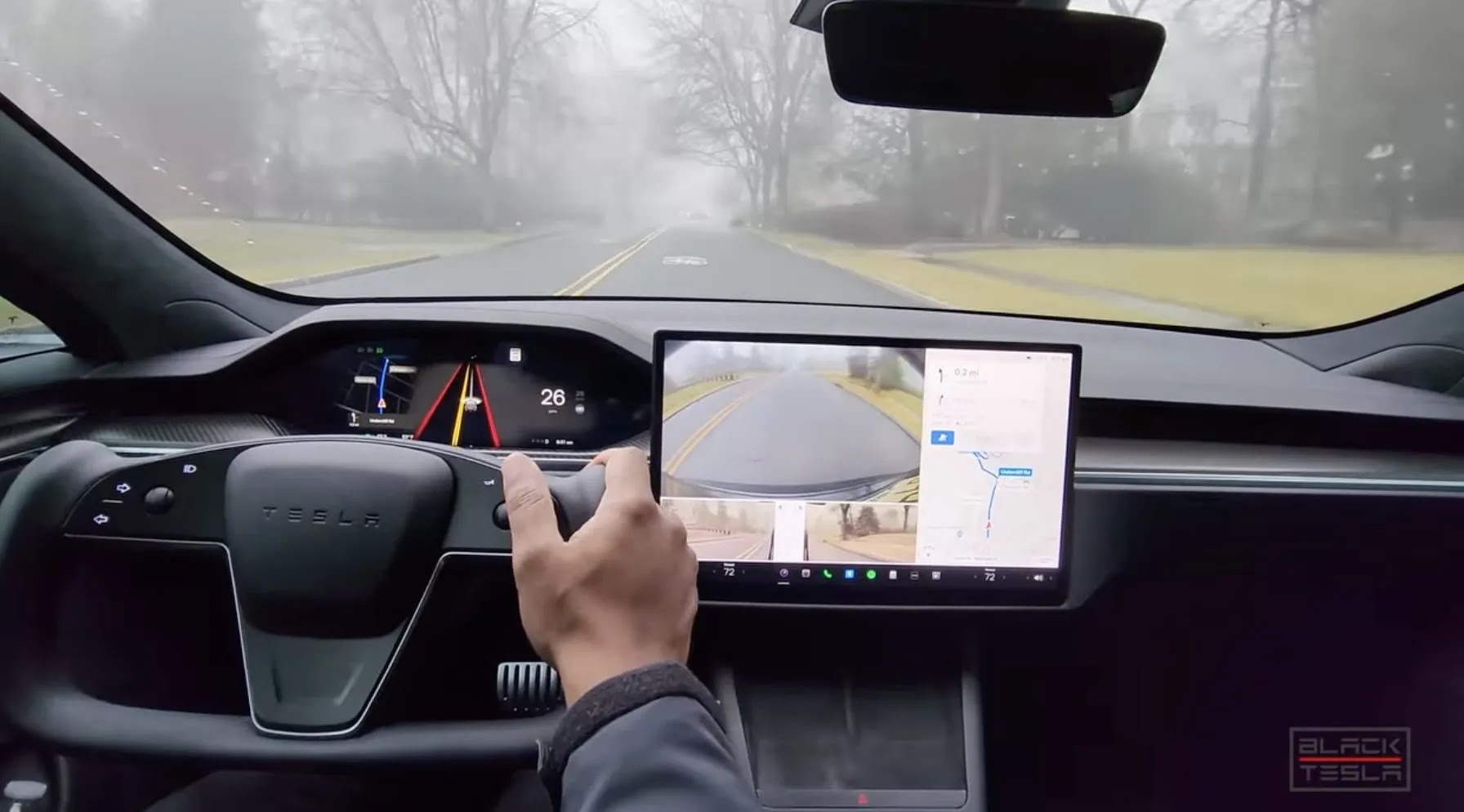
On January 1, Elon Musk, CEO of Tesla, tweeted about the possibility of removing the "steering wheel nag" warning from the Full Self-Driving (FSD) Beta system. The warning reminds drivers to keep their hands on the steering wheel while the car is in self-driving mode. In response, the National Highway Traffic Safety Administration (NHTSA) has requested clarification from Tesla regarding Musk's tweet. The NHTSA is currently investigating a number of accidents involving Tesla's Autopilot or FSD Beta systems.

Elon Musk's Tweet and Clarification

In a tweet on January 1, Elon Musk agreed with a statement that "users with more than 10,000 miles on FSD Beta should be given the option to turn off the steering wheel nag." He also stated that this change would be included in the upcoming FSD Beta update.

However, later that day, Musk clarified his statement, saying that the steering wheel nag will only be disabled for users who have demonstrated "competence" with the FSD Beta system. He added that the nag will remain in place for other users until regulators give the green light for fully autonomous driving.

NHTSA's Response

The NHTSA has requested clarification from Tesla on Musk's tweet regarding the removal of the steering wheel nag. In a statement, the NHTSA said it is "in contact with Tesla to understand the company's plans and their impact on safety."

Federal Regulations on Autonomous Driving

In order to comply with federal regulations, Tesla requires that its Autopilot and FSD features be used by "fully attentive drivers who have their hands on the wheel and are prepared to take over at any moment." This is because current regulations do not allow for fully autonomous driving, and any autonomous driving system must have a human driver ready to take control at all times.

Elon Musk's Previous Statements on Autonomous Driving

Earlier this year, Elon Musk had promised that Teslas would be turned into fully self-driving vehicles with the release of the FSD Beta v11 update by the end of 2022. However, regulators have stated that Tesla's autonomous driving features will still require a driver's attention for the foreseeable future, and will not certify the FSD Beta as anything but a Level 2 solution. A Level 2 system is one that can control the car's speed and steering, but the driver must be ready to take control at any time.

Conclusion

Elon Musk's recent tweet about the possibility of removing the steering wheel nag warning from the FSD Beta system has caught the attention of the NHTSA, which has requested clarification from Tesla. While Musk has stated that the nag will only be disabled for users who have demonstrated competence with the system, the NHTSA is concerned about the safety implications of this change. Federal regulations currently require that autonomous driving systems have a human driver ready to take control at all times, and it is unclear if Tesla's FSD Beta system will meet these regulations.

We invite readers to share their thoughts on this issue by commenting below or using the hashtags #ElonMusk and #NHTSA on social media. We would love to hear your perspectives on the potential removal of the steering wheel nag warning and the involvement of the NHTSA in this matter.

Tesla Model S Plaid Emerges as Fastest Car in Real-Life Acceleration Test

Tesla Model S Plaid
Image: Tesla Thailand

The Tesla Model S Plaid has officially become the fastest car ever tested in Motor Trend's 0-60 MPH vehicle acceleration rankings, beating out competitors such as the Porsche Taycan Turbo S, the 2022 Lucid Air, and the Audi RS E-Tron GT.

While Tesla lists the acceleration time for the Model S Plaid at 1.99 seconds, the car actually managed a time of 2.3 seconds in Motor Trend's testing, with one foot of rollout subtracted, similar to the National Hot Rod Association's drag tests. This is a slightly slower time than Tesla's promised 1.99 seconds, but it should be noted that manufacturer numbers often differ from third-party tests due to varying conditions.

Despite the slightly slower acceleration time, the Model S Plaid still managed to impress with a quarter-mile time of 9.3 seconds and a top speed of 152 MPH.

Fastest Production Cars (Acceleration):

  1. Tesla Model S Plaid: 2.3 seconds
  2. Porsche Taycan Turbo S: 2.4 seconds
  3. Lucid Air Grand Touring: 2.7 seconds
  4. Audi RS E-Tron GT: 2.9 seconds
  5. Mercedes-AMG EQS 4Matic+: 3 seconds

In addition to its impressive acceleration, the Model S Plaid also recently became the first production car to crack the 200 MPH top speed barrier, achieving a speed of 216 MPH in a non-standardized test.

While there are other performance electric cars on the horizon that may be faster than the Model S Plaid, such as the Lucid Air Sapphire Edition and the Hyper SSR, they are expected to be more expensive and are currently still in the prototype stage.

While the Model S Plaid offers impressive performance for a full-sized family sedan, Tesla's upcoming Roadster 2 performance sports car is expected to offer even more impressive acceleration, with a promised 0-60 MPH time of 1.9 seconds. The Roadster 2 is also expected to have a longer range on a single charge, thanks to its more compact sports car design. In fact, a prototype of the Roadster 2 on display at the Petersen Automotive Museum in LA included a "SpaceX package" that added cold air rocket thrusters to the rear of the car, allowing for an unprecedented 0-60 MPH acceleration time of 1.1 seconds.

Overall, the Tesla Model S Plaid has proven itself to be a formidable player in the world of performance electric cars, offering drivers a sub-2 seconds acceleration time and a top speed in excess of 200 MPH.

Thanks for reading our article on the Tesla Model S Plaid's impressive performance in real-life acceleration tests. We'd love to hear your thoughts on this groundbreaking car. Let us know what you think by leaving a comment below or using the hashtags #TeslaModelSPlaid #FastestCarEverTested #EVperformance.

Saturday, January 7, 2023

Tesla Forced to Remove Automatic Window Features Due to Federal Regulations

tesla

Tesla car owners in the United States are no longer able to use certain automated window features in their vehicles, according to recent reports. The removal of these features, including the ability to close windows automatically when locking the car or entering Car Wash mode, as well as the "Vent" and "Close" modes in the Tesla mobile app, has been attributed to "recent federal regulations."

The specific regulation in question appears to be an update to the Federal Motor Vehicle Safety Standard (FMVSS) 118, specifically Section 5, which was likely prompted by concerns over the potential for "pinching" of body parts by automatic windows in certain situations. Tesla had previously logged a recall request with the National Highway Traffic Safety Administration (NHTSA) over this issue and issued a software update to address it. However, it seems that the company has now removed a number of automated window options altogether, causing frustration among Tesla owners.

In addition to the removal of these features, Tesla car owners in the US must now press the brake pedal in order to use the window switches to roll the windows up or down, a change that has the potential to be particularly annoying for drivers. It is not yet clear if these regulations will affect Tesla vehicles in other countries, or if the issues can be resolved through further software development.

The removal of these popular features is a frustrating development for Tesla owners, who have come to rely on the convenience and functionality of the automated window options. It is unclear at this time when, or if, these features will be restored, leaving Tesla drivers in the US with fewer options for controlling their vehicle's windows. It remains to be seen how these regulations will impact the company and its customers going forward.

The news of the removal of these automated window features has sparked backlash among Tesla owners, who have taken to social media to express their frustration. Many have pointed out the convenience of being able to close the windows remotely, particularly in hot weather when it can be difficult to keep the car cool. Others have pointed out the potential security benefits of being able to close the windows automatically when locking the car.

It is worth noting that these regulations only apply to Tesla vehicles in the US at the moment, and it is not yet known if they will be implemented in other countries. However, if the issues with the automatic window features are related to the window motors or the need for additional sensors, and cannot be adequately addressed through software changes, it is possible that the automated closure features may be limited in other regions as well, depending on local regulations.

In the meantime, Tesla owners in the US will have to make do without these features, at least until further development of the software can bring them back. It is not yet clear when, or if, this will happen, leaving many Tesla drivers disappointed and frustrated.

Overall, the removal of these automated window features serves as a reminder of the potential impact of regulations on the functionality of vehicles. While safety concerns are certainly important, the inconvenience and frustration caused by the removal of these features highlights the need for a balance between regulation and consumer satisfaction. It will be interesting to see how this situation develops and whether the removed features will eventually be restored or if Tesla will have to find alternative solutions.

Do you own a Tesla vehicle in the US? How do you feel about the recent removal of certain automated window features due to federal regulations? Share your thoughts with us in the comments below and join the conversation on social media using the hashtag #TeslaWindowRegulations. We'd love to hear your perspective on this issue.

Friday, January 6, 2023

Tesla announces drastic price cuts for Model Y and Model 3 in China

Tesla Model Y

Tesla has announced another round of price cuts for its Model Y and Model 3 vehicles in China, citing increased manufacturing efficiencies and decreased component costs. The base rear-wheel drive Model 3 now starts at the equivalent of $33,427, while the entry-level Model Y costs $37,875. This marks the Model 3's most drastic price decrease ever, with the price being 14% lower than before, while the Model Y's price has been lowered by 10% for the second time in a few months. As a result, the Model Y is now 43% cheaper in China compared to the US, while the Model 3 is 30% cheaper.

Grace Tao Lin, Tesla China's PR Vice President, attributed the price cuts to "countless engineering innovations" and "excellent laws of cost controls", including vehicle integration design, production line design, supply chain management, and optimization of robotic arms. However, industry analysts have suggested that the price cuts may also be due to slumping demand and increased competition from local brands like BYD.

In October, Tesla also lowered the prices of the Model Y and Model 3 in China by 10%, and offered additional incentives such as free coats of paint or preferential insurance rates. In the US, Tesla has not yet implemented direct price cuts, but did offer the same incentives to buyers with December deliveries, as well as free Supercharger miles, due to the introduction of the Inflation Reduction Act EV subsidies on January 1st. It remains to be seen if the arrival of Giga Shanghai's overhauling chief Tom Zhu in the US and his promotion to second in command after Elon Musk will result in similar synergies and price cuts in the US market.

Tesla Model 3

Overall, the latest price cuts for the Model Y and Model 3 in China demonstrate Tesla's continued efforts to increase manufacturing efficiencies and reduce costs, in order to make its electric vehicles more accessible and competitive in the market.

Thank you for reading our article on Tesla's latest price cuts for the Model Y and Model 3 in China. We welcome your thoughts and comments on this development. If you have any insights or opinions on the matter, please share them with us by using the hashtags #TeslaPriceCuts and #ModelYModel3. We look forward to hearing your thoughts on this topic.

Powered by Blogger.