Search This Blog

Showing posts with label News. Show all posts

Thursday, January 12, 2023

Tesla Tops Luxury Vehicle Sales Rankings in the US, Beating Out BMW and Mercedes

tesla

Tesla has managed to beat premium car giants like BMW, Mercedes-Benz, and Lexus in America's luxury vehicle sales rankings. The company's strategy to start with luxury performance vehicles and use the revenue to develop mass market vehicles like the Model 3 and the upcoming Model 2 is slowly coming to fruition. Tesla is now the first local automaker to head the prestigious luxury vehicles sales ranking in the US in 25 years.

Tesla's Sales Numbers

According to Autonews estimates, Tesla shipped 491,000 premium luxury cars last year, i.e. vehicles above a certain price threshold. This beats the usual suspects like BMW, Mercedes, Lexus, Audi, or Cadillac in the luxury vehicle market. The sales numbers for the top brands in the luxury vehicle market are as follows:

  • Tesla: 491,000
  • BMW: 332,388
  • Mercedes-Benz: 286,764
  • Lexus: 258,704
  • Audi: 186,875
  • Cadillac: 134,726
  • Acura: 102,306
  • Volvo: 102,038

Tesla's Prices and Profits

Tesla's enviable profits of about US$10,000 per vehicle, and high average selling prices, have now made it the top premium car brand in the US. Tesla's EV prices were increased several times last year before leveling off because of federal subsidies, which have helped move nearly a third of its vehicle sales into the luxury market category. The base Tesla Model Y Long Range sold in the US now starts at $65,990, while the purchase price of the Model 3 Performance is $62,990. Even the cheapest RWD Tesla gets above the $50,000 threshold with a few extras thrown in.

The Impact of the Inflation Reduction Act

It remains to be seen if the Inflation Reduction Act's 2023 new EV subsidy bonanza will affect Tesla's newly minted standing as America's top premium car brand now, a rather quirky position to be in given that Tesla is also rated as the most fuel-efficient automaker in the US. The most popular 7-seater trim of its bestselling Model Y SUV doesn't qualify for the $7,500 subsidy according to the Treasury Department, though, so it may very well beat BMW and Mercedes again, considering the general car market malaise that is expected to hit premium vehicles in 2023 on account of the rise in interest rates.

Conclusion

Tesla's strategy to start with luxury performance vehicles and use the revenue to develop mass market vehicles is slowly coming to fruition. The company has managed to beat premium car giants like BMW, Mercedes-Benz, and Lexus in America's luxury vehicle sales rankings, making it the first local automaker to head the prestigious luxury vehicles sales ranking in the US in 25 years. The impact of the Inflation Reduction Act on Tesla's position as the top premium car brand in the US remains to be seen.

As we have seen, Tesla has managed to beat premium car giants like BMW, Mercedes-Benz, and Lexus in America's luxury vehicle sales rankings, making it the first local automaker to head the prestigious luxury vehicles sales ranking in the US in 25 years. We hope you found this article informative and thought-provoking. We would love to hear your thoughts on this topic, please feel free to leave a comment below and let us know what you think. Share your thoughts with us on social media using the hashtags #Tesla #LuxuryCars #EVs.

Tuesday, January 10, 2023

Volkswagen ID.4: The Electric Vehicle Sales Champion of 2022

Volkswagen ID.4

Volkswagen has had a banner year for electric vehicle (EV) sales in 2022, with the ID.4 being declared the marque's most popular EV worldwide. The German automaker shipped nearly 24% more electric cars to customers in 2022 compared to 2021, doubling those sent to China and also growing those sent to the North American market. The ID.4 was found to be responsible for most of these shipments, and was also deemed the best-selling car in one market for the second year running.

Overall Volkswagen Sales

Despite the increased focus on EV sales, Volkswagen's overall vehicle shipments saw a drop of 6.8% in 2022 compared to 2021, with a total of 4.56 million vehicles shipped worldwide. However, the marque notes that demand for its cars remained strong, with a 18% growth in Europe and a backlog that "remains very high".

Growth in Electric Vehicle Sales

Global deliveries of Volkswagen's EVs saw a significant increase of 23.6% year-on-year (YoY), with North American shipments growing by 27.7%. But the biggest growth was seen in Volkswagen's largest market, China, where EV shipments went up by 102.9%. The ID.4, one of the models available in that region, is now accounted as Volkwagen's "top electric world car" for 2022, accounting for ~52% of its ~330,000 deliveries for the year. The marque claims it as the top-selling car of any type in Sweden, as it was in 2021.

Volkswagen's Electric Vehicle Market Success

Volkswagen has been in the EV market for just over 2 years now, yet estimates deliveries from this line of business at over 580,000. This success can be attributed to the wide range of EV models that Volkswagen offers, including the ID.4, which has proven to be a hit with customers worldwide.

Upcoming Models and Future Plans

Volkswagen has announced plans for an upcoming ID.7 flagship EV that may help keep their sales numbers strong. They also revealed a new EV at the other end of the scale, that may start at €25,000 (~US$27,000) or less, by 2026, in order to expand their range and cater to all customers.

Conclusion

Volkswagen has had a successful year in 2022 with electric vehicle sales, with the ID.4 being declared the marque's most popular EV worldwide. While the automaker's overall vehicle shipments saw a decrease, the demand for EVs remained strong and the marque saw a significant increase in EV deliveries, particularly in their biggest market, China. Volkswagen's success in the EV market in a short period of time and their future plans shows their dedication to produce and innovate more in the electric vehicle market, and cater to all customers.

We would love to hear your thoughts on Volkswagen's success with the ID.4 and their future plans for EVs. Please feel free to share your comments and let us know what you think by using the hashtags #VolkswagenEVs #ID4 #EVfuture on social media platforms.

Monday, January 9, 2023

Fiido Teases Next-Gen E-MTB, Scooter, and 'Two-Wheeled SUV' at New Website Launch

Fiido

Fiido, a manufacturer of electric bikes, has launched a new website for its 2023 business. The website includes links to existing products, such as the Beast e-scooter, as well as teasers for new products, including the K1 children's bike, the Q2 seat-only scooter, and the C21 carbon e-bike. The website also includes a teaser for Fiido's first-ever app, which is expected to be released soon for iOS with features such as remote unlocking for paired bikes.

New E-Bike Models

One of the new products teased on Fiido's website is the C21, an e-bike with an "unprecedented" meter display and "many unexpected and innovative features" in a 13kg frame. Another new model is a 2-wheeled "answer to heavy-duty SUVs," with a flat front rack and a wood-faced rear-mounted rack.

In addition, Fiido has hinted at the launch of an E-MTB (electric mountain bike) with a build to match its name. This E-MTB is expected to be the first of the new products to launch in 2023.

Fiido's App

Fiido's new app, which is expected to be released for iOS in the near future, will include features such as remote unlocking for paired bikes. It is unclear at this time if the app will also be released for Android.

Pricing and Availability

No pricing information has been released for the new e-bikes teased on Fiido's website. It is also unclear at this time when these bikes will be available for purchase.

Competition

Fiido will likely face competition in the e-bike market from other manufacturers such as Pedego, Trek, and Specialized. These companies offer a range of electric bikes for various purposes, including mountain biking, commuting, and leisure riding. It remains to be seen how Fiido's new e-bikes will compare in terms of features, performance, and price.

Potential Benefits of E-Bikes

E-bikes can provide a number of benefits over traditional bicycles, including the ability to tackle hills and headwinds with ease, the ability to go longer distances without getting tired, and the ability to arrive at your destination without breaking a sweat. E-bikes can also be a more environmentally friendly mode of transportation than cars, as they do not produce emissions.

Conclusion

Fiido has launched a new website for its 2023 business, which includes teasers for several new electric bikes. These bikes include the K1 children's bike, the Q2 seat-only scooter, the C21 carbon e-bike, and a 2-wheeled "SUV" with a flat front rack and a wood-faced rear-mounted rack. The company is also expected to release its first-ever app for iOS, with features such as remote unlocking for paired bikes. No pricing or availability information has been released for these bikes at this time. Fiido will likely face competition in the e-bike market from other manufacturers, and it remains to be seen how their new products will compare in terms of features, performance, and price.

We invite readers to share their thoughts on Fiido's new electric bike models by commenting below or using the hashtags #Fiido and #electricbikes on social media. What do you think of these new models? Do you think they will be successful in the market? We would love to hear your perspectives on Fiido's foray into the world of electric bikes.

NHTSA Seeking Clarification from Tesla on Elon Musk's Tweet About Removing Steering Wheel Nag

Tesla Steering Wheel Nag
Image: teslanorth.com

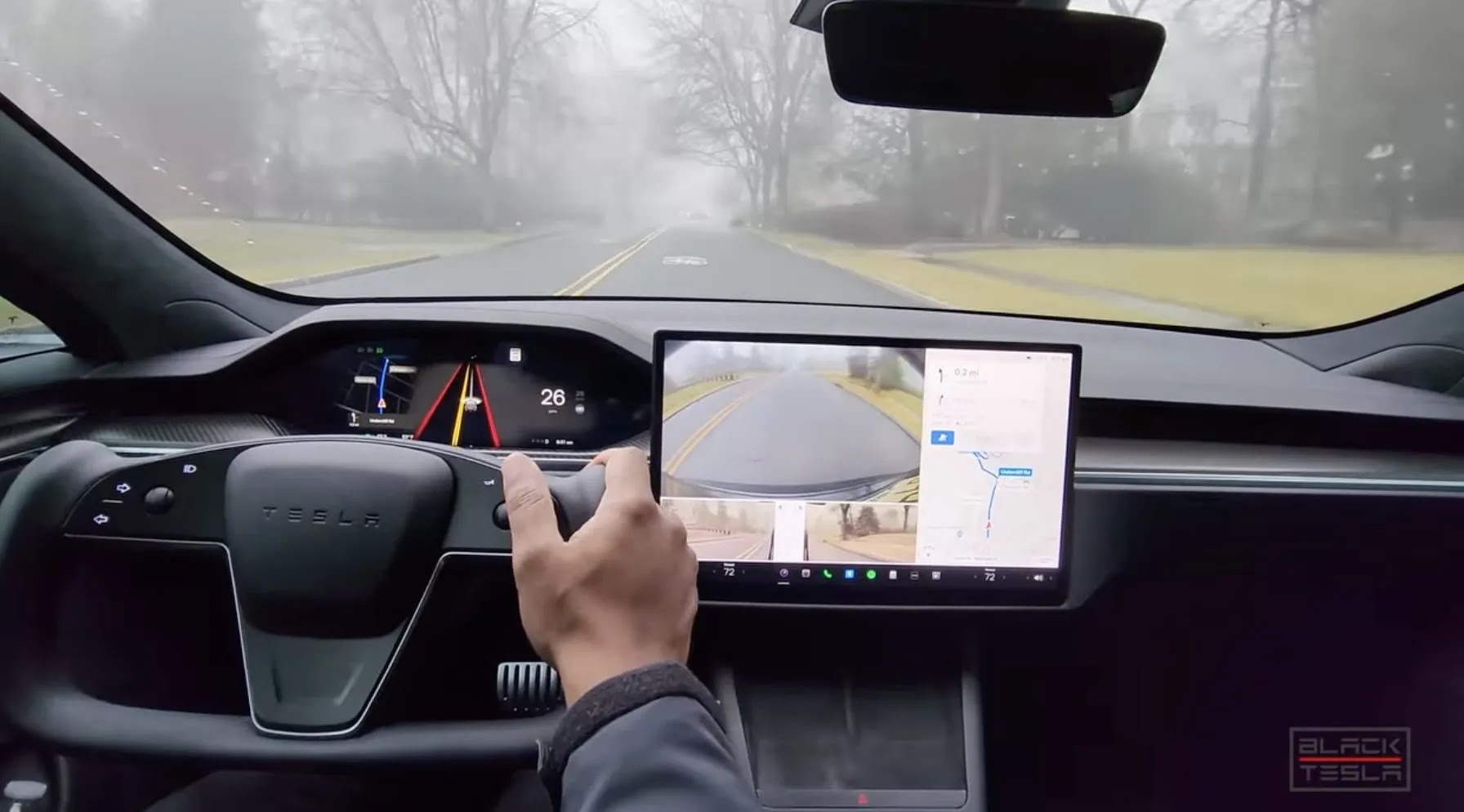
On January 1, Elon Musk, CEO of Tesla, tweeted about the possibility of removing the "steering wheel nag" warning from the Full Self-Driving (FSD) Beta system. The warning reminds drivers to keep their hands on the steering wheel while the car is in self-driving mode. In response, the National Highway Traffic Safety Administration (NHTSA) has requested clarification from Tesla regarding Musk's tweet. The NHTSA is currently investigating a number of accidents involving Tesla's Autopilot or FSD Beta systems.

Elon Musk's Tweet and Clarification

In a tweet on January 1, Elon Musk agreed with a statement that "users with more than 10,000 miles on FSD Beta should be given the option to turn off the steering wheel nag." He also stated that this change would be included in the upcoming FSD Beta update.

However, later that day, Musk clarified his statement, saying that the steering wheel nag will only be disabled for users who have demonstrated "competence" with the FSD Beta system. He added that the nag will remain in place for other users until regulators give the green light for fully autonomous driving.

NHTSA's Response

The NHTSA has requested clarification from Tesla on Musk's tweet regarding the removal of the steering wheel nag. In a statement, the NHTSA said it is "in contact with Tesla to understand the company's plans and their impact on safety."

Federal Regulations on Autonomous Driving

In order to comply with federal regulations, Tesla requires that its Autopilot and FSD features be used by "fully attentive drivers who have their hands on the wheel and are prepared to take over at any moment." This is because current regulations do not allow for fully autonomous driving, and any autonomous driving system must have a human driver ready to take control at all times.

Elon Musk's Previous Statements on Autonomous Driving

Earlier this year, Elon Musk had promised that Teslas would be turned into fully self-driving vehicles with the release of the FSD Beta v11 update by the end of 2022. However, regulators have stated that Tesla's autonomous driving features will still require a driver's attention for the foreseeable future, and will not certify the FSD Beta as anything but a Level 2 solution. A Level 2 system is one that can control the car's speed and steering, but the driver must be ready to take control at any time.

Conclusion

Elon Musk's recent tweet about the possibility of removing the steering wheel nag warning from the FSD Beta system has caught the attention of the NHTSA, which has requested clarification from Tesla. While Musk has stated that the nag will only be disabled for users who have demonstrated competence with the system, the NHTSA is concerned about the safety implications of this change. Federal regulations currently require that autonomous driving systems have a human driver ready to take control at all times, and it is unclear if Tesla's FSD Beta system will meet these regulations.

We invite readers to share their thoughts on this issue by commenting below or using the hashtags #ElonMusk and #NHTSA on social media. We would love to hear your perspectives on the potential removal of the steering wheel nag warning and the involvement of the NHTSA in this matter.

Volkswagen ID.4 Recall: Over 1,000 Vehicles Recalled Due to Potential Fire Hazard

Volkswagen ID.4

On January 4, 2023, Volkswagen announced a recall of over 1,000 of its ID.4 electric vehicles due to a potential fire hazard. The problem lies with the 12-volt battery cable, which could potentially cause a short circuit and fire if it rubs against the steering column and the resulting friction damages the cable's insulation.

Affected Models

The recall affects rear-wheel drive units from the 2022 and 2023 model years of the Volkswagen ID.4. The issue does not occur in the all-wheel drive variant of the vehicle.

Cause of the Recall

According to Volkswagen, the 12-volt battery cable could eventually wear out due to friction on the steering column. If the insulation on the cable is severely damaged, it could lead to a short circuit or even a fire.

Notification and Repair Process

Affected owners in the US will be notified in writing by the end of February 2023. Volkswagen also stated that ID.4 drivers should pay attention to a warning message concerning the 12-volt system, which may indicate that the cable has already been damaged.

Importance of the Recall

While this recall affects a relatively small number of vehicles, it is important for affected owners to have the issue addressed in order to prevent a potential fire. It is also worth noting that the cable in question is not part of the electric drivetrain, which operates at up to 408 volts and could potentially cause more serious issues if it were to malfunction.

Conclusion

The Volkswagen ID.4 recall serves as a reminder of the importance of regularly maintaining and checking one's vehicle in order to prevent potential hazards. Affected owners should follow the notification and repair process outlined by the automaker in order to address the issue and ensure the safety of their vehicles.

If you have any thoughts or comments on the topic, we would love to hear from you. Please feel free to share your opinions in the comments section below or on social media using the hashtag #VWID4Recall. We welcome all perspectives and appreciate your input.

Tesla Model S Plaid Emerges as Fastest Car in Real-Life Acceleration Test

Tesla Model S Plaid
Image: Tesla Thailand

The Tesla Model S Plaid has officially become the fastest car ever tested in Motor Trend's 0-60 MPH vehicle acceleration rankings, beating out competitors such as the Porsche Taycan Turbo S, the 2022 Lucid Air, and the Audi RS E-Tron GT.

While Tesla lists the acceleration time for the Model S Plaid at 1.99 seconds, the car actually managed a time of 2.3 seconds in Motor Trend's testing, with one foot of rollout subtracted, similar to the National Hot Rod Association's drag tests. This is a slightly slower time than Tesla's promised 1.99 seconds, but it should be noted that manufacturer numbers often differ from third-party tests due to varying conditions.

Despite the slightly slower acceleration time, the Model S Plaid still managed to impress with a quarter-mile time of 9.3 seconds and a top speed of 152 MPH.

Fastest Production Cars (Acceleration):

  1. Tesla Model S Plaid: 2.3 seconds
  2. Porsche Taycan Turbo S: 2.4 seconds
  3. Lucid Air Grand Touring: 2.7 seconds
  4. Audi RS E-Tron GT: 2.9 seconds
  5. Mercedes-AMG EQS 4Matic+: 3 seconds

In addition to its impressive acceleration, the Model S Plaid also recently became the first production car to crack the 200 MPH top speed barrier, achieving a speed of 216 MPH in a non-standardized test.

While there are other performance electric cars on the horizon that may be faster than the Model S Plaid, such as the Lucid Air Sapphire Edition and the Hyper SSR, they are expected to be more expensive and are currently still in the prototype stage.

While the Model S Plaid offers impressive performance for a full-sized family sedan, Tesla's upcoming Roadster 2 performance sports car is expected to offer even more impressive acceleration, with a promised 0-60 MPH time of 1.9 seconds. The Roadster 2 is also expected to have a longer range on a single charge, thanks to its more compact sports car design. In fact, a prototype of the Roadster 2 on display at the Petersen Automotive Museum in LA included a "SpaceX package" that added cold air rocket thrusters to the rear of the car, allowing for an unprecedented 0-60 MPH acceleration time of 1.1 seconds.

Overall, the Tesla Model S Plaid has proven itself to be a formidable player in the world of performance electric cars, offering drivers a sub-2 seconds acceleration time and a top speed in excess of 200 MPH.

Thanks for reading our article on the Tesla Model S Plaid's impressive performance in real-life acceleration tests. We'd love to hear your thoughts on this groundbreaking car. Let us know what you think by leaving a comment below or using the hashtags #TeslaModelSPlaid #FastestCarEverTested #EVperformance.

Kia Niro EV Cargo: A Versatile and Efficient Delivery Solution

Kia Niro EV Cargo

The Kia Niro EV Cargo has recently been unveiled in the Netherlands, offering a versatile and environmentally friendly delivery solution for businesses. The electric vehicle (EV) has a range of up to 460 km, or 286 miles, and 255 Nm of torque, thanks to its 64.8 kWh battery and 150 kW motor. The Niro EV Cargo is created using a conversion kit that includes an aluminum coated load area and metal divider, transforming the standard Niro EV into a delivery vehicle.

Two versions of the cargo kit are available for the Niro EV Cargo. The Basic Kit, which retails for €1,990, or approximately $2,122, includes an aluminum-coated load floor, a metal bar divider to fit behind the front seats, and two lashing eyes to secure cargo. The Pro Kit includes the same parts, in addition to four more lashing eyes and two storage compartments between the front seats and beneath the load area. The Pro Kit is priced at €2,680, or about $2,858.

Four different models of the Kia Niro EV Cargo are available, ranging from the entry-level DynamicLine to the top-end ExecutiveLine. Prices for the EV start at €38,230, and the vehicles come with a generous seven-year or 150,000 km warranty.

Charging the Niro EV Cargo is convenient and efficient, with the ability to charge from 10 to 80% in just 43 minutes using a fast charger.

Collaboration with Veth Automotive

The Kia Niro EV Cargo is a collaborative effort between Kia and Veth Automotive, a Dutch company specializing in the development and production of electric drive systems and electric vehicles. The two companies have worked together to create a smart conversion kit that allows the Niro to be easily transformed into a delivery vehicle.

The Niro EV Cargo sits between Kia's e-Soul delivery van and standard Niro EV models, offering a unique combination of functionality and sustainability. Its aluminum coated load area and metal divider make it a practical choice for businesses looking to transport goods, while its electric powertrain ensures low emissions and cost-effectiveness.

Conclusion

The Kia Niro EV Cargo is a welcome addition to the growing market of electric delivery vehicles. Its impressive range, strong torque, and durable design make it a practical choice for businesses looking to reduce their carbon footprint and operating costs. The availability of two cargo kits, as well as a range of models, allows for customization to meet the specific needs of each business. The collaboration between Kia and Veth Automotive has resulted in a smart and efficient solution for delivery needs.

We invite readers to share their thoughts on the Kia Niro EV Cargo in the comments section below. Do you think this electric delivery vehicle is a practical solution for businesses? How do you think it compares to other electric delivery options on the market? Let us know your thoughts using the hashtags #KiaNiroEVCargo and #ElectricDelivery. We look forward to hearing your opinions!

Saturday, January 7, 2023

Tesla Forced to Remove Automatic Window Features Due to Federal Regulations

tesla

Tesla car owners in the United States are no longer able to use certain automated window features in their vehicles, according to recent reports. The removal of these features, including the ability to close windows automatically when locking the car or entering Car Wash mode, as well as the "Vent" and "Close" modes in the Tesla mobile app, has been attributed to "recent federal regulations."

The specific regulation in question appears to be an update to the Federal Motor Vehicle Safety Standard (FMVSS) 118, specifically Section 5, which was likely prompted by concerns over the potential for "pinching" of body parts by automatic windows in certain situations. Tesla had previously logged a recall request with the National Highway Traffic Safety Administration (NHTSA) over this issue and issued a software update to address it. However, it seems that the company has now removed a number of automated window options altogether, causing frustration among Tesla owners.

In addition to the removal of these features, Tesla car owners in the US must now press the brake pedal in order to use the window switches to roll the windows up or down, a change that has the potential to be particularly annoying for drivers. It is not yet clear if these regulations will affect Tesla vehicles in other countries, or if the issues can be resolved through further software development.

The removal of these popular features is a frustrating development for Tesla owners, who have come to rely on the convenience and functionality of the automated window options. It is unclear at this time when, or if, these features will be restored, leaving Tesla drivers in the US with fewer options for controlling their vehicle's windows. It remains to be seen how these regulations will impact the company and its customers going forward.

The news of the removal of these automated window features has sparked backlash among Tesla owners, who have taken to social media to express their frustration. Many have pointed out the convenience of being able to close the windows remotely, particularly in hot weather when it can be difficult to keep the car cool. Others have pointed out the potential security benefits of being able to close the windows automatically when locking the car.

It is worth noting that these regulations only apply to Tesla vehicles in the US at the moment, and it is not yet known if they will be implemented in other countries. However, if the issues with the automatic window features are related to the window motors or the need for additional sensors, and cannot be adequately addressed through software changes, it is possible that the automated closure features may be limited in other regions as well, depending on local regulations.

In the meantime, Tesla owners in the US will have to make do without these features, at least until further development of the software can bring them back. It is not yet clear when, or if, this will happen, leaving many Tesla drivers disappointed and frustrated.

Overall, the removal of these automated window features serves as a reminder of the potential impact of regulations on the functionality of vehicles. While safety concerns are certainly important, the inconvenience and frustration caused by the removal of these features highlights the need for a balance between regulation and consumer satisfaction. It will be interesting to see how this situation develops and whether the removed features will eventually be restored or if Tesla will have to find alternative solutions.

Do you own a Tesla vehicle in the US? How do you feel about the recent removal of certain automated window features due to federal regulations? Share your thoughts with us in the comments below and join the conversation on social media using the hashtag #TeslaWindowRegulations. We'd love to hear your perspective on this issue.

Friday, January 6, 2023

New version of Android Auto brings improved functionality and expanded digital car key feature

https://youtu.be/ZSGja_69elo

Google has released a new version of its Android Auto entertainment interface for vehicles, which was originally announced at Google I/O 2022 and codenamed Coolwalk. The update brings a range of new features and improvements to the platform, including a revised design, enhanced Google Assistant capabilities, and the ability to make WhatsApp calls.

One of the major updates in the new version of Android Auto is the revised design, which includes a Material You overhaul. This new design is intended to be device agnostic, meaning it should work on a wide range of devices. Android Auto has also been updated to always display Google Maps on the driver's side of the screen, with an emphasis on navigation. In previous versions of the platform, it was possible to switch focus between different apps on some in-car displays, but this feature has been removed in the latest update.

Another significant change in the new Android Auto is the improved functionality of the Google Assistant. The virtual assistant now provides smart suggestions and has been integrated into the platform to make it easier for users to access its features. In addition to these updates, Android Auto now allows users to select specific points within a song or podcast by tapping the progress bar, a feature that was previously not available.

One of the most notable new features in the updated Android Auto is the ability for Samsung Galaxy and Pixel 7 series users to make WhatsApp calls within the platform. It is not yet clear if this feature will be made available to users of other smartphones, but it is likely that it will be rolled out to a wider range of devices in the future.

Alongside these updates, Google has also expanded the digital car key feature of Android Auto to select Samsung smartphones. This feature allows users to remotely unlock and start their vehicles using their smartphone, and it is currently mostly available on BMW vehicles. However, Google plans to expand the feature to a wider range of car brands in the future, although it has not provided a timeline for when this will happen. Xiaomi smartphones will also gain support for the digital car key feature later this year.

As with any software update, it's important to ensure that your device is compatible with the new version of Android Auto before attempting to install it. Google has not yet released a list of compatible devices, but it is expected that the update will be available on a wide range of smartphones. It's worth noting that some features of the new Android Auto may be limited to certain devices. For example, the ability to make WhatsApp calls is currently only available to Samsung Galaxy and Pixel 7 series users, and it is not yet clear if this feature will be rolled out to other smartphone models. Similarly, the digital car key feature is currently only available on select Samsung smartphones and will be added to some Xiaomi devices later in the year.

If you own a compatible device and are interested in trying out the new version of Android Auto, you can check for updates through the Google Play Store or by visiting the Android Auto website. The update process should be straightforward, but it's always a good idea to make sure you have a stable internet connection and to follow the prompts carefully to ensure a smooth installation.

Overall, the new version of Android Auto brings a range of new features and improvements to the platform, including a revised design, enhanced Google Assistant capabilities, and the ability to make WhatsApp calls. While some of these features are currently only available on certain smartphone models, it is expected that they will be rolled out to a wider range of devices in the future. If you own a compatible device and are interested in trying out the new version of Android Auto, you can check for updates through the Google Play Store or by visiting the Android Auto website.

Are you excited to try out the new version of Android Auto? Share your thoughts and experiences with us by leaving a comment below and don't forget to use the hashtags #AndroidAuto and #GoogleAssistant! We'd love to hear from you.

Tesla announces drastic price cuts for Model Y and Model 3 in China

Tesla Model Y

Tesla has announced another round of price cuts for its Model Y and Model 3 vehicles in China, citing increased manufacturing efficiencies and decreased component costs. The base rear-wheel drive Model 3 now starts at the equivalent of $33,427, while the entry-level Model Y costs $37,875. This marks the Model 3's most drastic price decrease ever, with the price being 14% lower than before, while the Model Y's price has been lowered by 10% for the second time in a few months. As a result, the Model Y is now 43% cheaper in China compared to the US, while the Model 3 is 30% cheaper.

Grace Tao Lin, Tesla China's PR Vice President, attributed the price cuts to "countless engineering innovations" and "excellent laws of cost controls", including vehicle integration design, production line design, supply chain management, and optimization of robotic arms. However, industry analysts have suggested that the price cuts may also be due to slumping demand and increased competition from local brands like BYD.

In October, Tesla also lowered the prices of the Model Y and Model 3 in China by 10%, and offered additional incentives such as free coats of paint or preferential insurance rates. In the US, Tesla has not yet implemented direct price cuts, but did offer the same incentives to buyers with December deliveries, as well as free Supercharger miles, due to the introduction of the Inflation Reduction Act EV subsidies on January 1st. It remains to be seen if the arrival of Giga Shanghai's overhauling chief Tom Zhu in the US and his promotion to second in command after Elon Musk will result in similar synergies and price cuts in the US market.

Tesla Model 3

Overall, the latest price cuts for the Model Y and Model 3 in China demonstrate Tesla's continued efforts to increase manufacturing efficiencies and reduce costs, in order to make its electric vehicles more accessible and competitive in the market.

Thank you for reading our article on Tesla's latest price cuts for the Model Y and Model 3 in China. We welcome your thoughts and comments on this development. If you have any insights or opinions on the matter, please share them with us by using the hashtags #TeslaPriceCuts and #ModelYModel3. We look forward to hearing your thoughts on this topic.

Powered by Blogger.